 How-to
Natural Lawn Care Tips for Beginners: A Step-by-Step Guide
Last Updated: October 23, 2026
Quick Summary
Natural lawn care tips begin with testing your soil to reveal nutrient levels and pH, then amending with organic matter like compost and well-rotted manure. Choose grass seed matched to your climate and shade conditions, water deeply but less frequently to encourage deep roots, mow at 5 to 7.5 cm removing only one-third of the blade, and fertilize with organic options like compost and grass clippings.
- Test soil pH between 6.0 and 7.0; add lime if too acidic or sulfur if too alkaline.
- Mow when grass reaches 1.5 times your target height and remove only one-third of the blade per cut.
- Water 2.5 to 4 cm per week early morning, deeply but less frequently, to build deep roots.
- Spread 1 to 2.5 cm of compost in spring or fall to add nutrients and improve soil structure.
- Leave grass clippings on the lawn; grasscycling reduces fertilizer needs by 25 to 30 percent.
Table of Contents
- Test and Prepare Your Soil for Natural Lawn Care
- Choose the Right Grass Seed and Species
- How Often to Water a Lawn for Optimal Growth
- Lawn Mowing Tips for Beginners: Height and Frequency
- Fertilize Naturally: Using Organic Lawn Fertilizer
- Natural Weed Control for Lawns Without Chemicals
- Month-by-Month Natural Lawn Care Calendar
- Early spring (late March to April): wake-up and assess
- Late spring (May to early June): the growth window
- Summer (late June to August): protect, do not push
- Early fall (late August to September): the best window of the year
- Late fall (October to November): set up for winter
- Winter (December to February): plan, do not work
- Troubleshooting Common Lawn Problems Naturally
- Frequently Asked Questions
Test and Prepare Your Soil for Natural Lawn Care
Healthy soil is the foundation of a thriving lawn. Many homeowners skip testing and wonder why their grass struggles; you can't fix what you don't measure.
Testing reveals what nutrients are present, what's missing, and what to adjust. This is where natural lawn care tips begin, with dirt, not seed or water.
How to test your soil at home
You have two options: a DIY test or a professional lab analysis.
DIY soil testing kits are affordable and fast, available at garden centers or online. They test nitrogen, phosphorus, potassium, and pH:
- Collect soil samples from 4-5 spots in your yard
- Mix them in a clean container
- Follow the kit's instructions (usually adding water and comparing colors to a chart)
DIY kits give a rough picture, not exact numbers.
Professional soil testing through an agricultural extension office or private lab is more accurate, measuring nutrient levels, organic matter, and soil structure, then returning specific amendment recommendations.

Interpreting your results and amending soil
Your results show three key numbers: nitrogen (N), phosphorus (P), and potassium (K), plus pH.
pH matters for grass. Most grass species prefer a pH between 6.0 and 7.0.
Nutrient deficiencies are fixed with organic amendments. Low nitrogen: add compost or well-rotted manure, which break down slowly and feed soil over time.
The goal is building soil health, not quick fixes.
Choose the Right Grass Seed and Species
Picking the wrong grass seed is like buying the wrong tool for a job. The right species and cultivar germinate faster, grow stronger, and need less help from you.
Match the species to your climate and use
Cool-season grasses grow best where summers are moderate and winters are cold. They green up in spring and fall and can go semi-dormant in mid-summer heat. The main types are:
- Kentucky bluegrass: dense, self-repairing via rhizomes, but slow to germinate and thirsty. Best in full sun with irrigation.
- Tall fescue: deep-rooted, drought-tolerant, and wear-tolerant. Coarse texture; best for high-traffic family lawns.
- Fine fescues (creeping red, chewings, hard): shade-tolerant and low-input, but less wear-tolerant. Excellent for shady or low-maintenance areas.
Warm-season grasses grow actively in summer and go dormant in cool weather. Common choices include zoysia, bermuda, and St. Augustine, but they are not reliable where winters freeze; there, cool-season species are the practical choice.
Most practitioners recommend a mix rather than a single species: tall fescue blended with Kentucky bluegrass and fine fescue gives wear tolerance, density, and shade tolerance in one lawn.
Read the seed label like a beginner should
Every bag sold in Canada should carry a label with:
- Species and cultivar names and the percentage of each. Avoid bags that list only "grass seed" or "lawn mix" without percentages.
- Germination percentage per species. Look for 85% or higher on the main species.
- Purity (actual seed versus inert matter or weed seed). Aim for 95%+ purity and 0.1% or less weed seed.
Seeding rates and establishment for beginners
- Overseeding an existing lawn: roughly 1-2 kg per 100 m², depending on species and how thin the lawn is.
- New lawn from seed: roughly 2-4 kg per 100 m². Follow the label rate for your specific mix.
- Seed-to-soil contact matters more than depth. Rake or core-aerate, spread seed, top-dress with about 0.5 cm of compost, and walk it in. Don't bury seed; most grass seed needs light to germinate.
Match seed to shade and traffic
- Heavy shade: fine fescues and shade-tolerant tall fescue cultivars outperform bluegrass.
- High traffic: tall fescue and perennial ryegrass blends recover better than fine fescue.
- Low-input, low-water goals: fine fescue blends need the least mowing and water, though they establish more slowly.
How Often to Water a Lawn for Optimal Growth
Most people water too often and too shallow, which encourages shallow roots and weak grass.
The rule: water deeply but less frequently. This forces roots deeper, where they access moisture during dry spells, making grass more resilient.
Watering depth and timing for beginners
Water your lawn 2.5 to 4 cm per week, including rain. If you get 1 cm of rain, add 1.5 to 3 cm from irrigation.
Water early in the morning, between 6 AM and 10 AM, so grass dries before evening and disease risk drops.
Water less frequently but longer. Instead of 10 minutes daily, water 30-40 minutes two or three times per week so it soaks deep into the soil.
Check soil moisture with a screwdriver: if it slides in easily to 15 cm, you have enough moisture; if it stops at 5-7.5 cm, water more or deeper. In hot, dry spells grass may need water twice per week; in cool spring and fall, once is often enough.
Lawn Mowing Tips for Beginners: Height and Frequency
Many people damage their lawn by mowing too short, too often, or with dull blades; each mistake weakens the grass. The basic rule for natural lawn care tips: mow when grass reaches about 1.5 times your target height, then cut only one-third of the blade off.
The one-third rule and sharp blade maintenance
The one-third rule is non-negotiable. Never remove more than one-third of the grass blade in a single mow.
Mowing height varies by grass type. Cool-season grasses like fescue and bluegrass do best at 5 to 7.5 cm. Taller grass shades soil, keeps it cooler, and competes better against weeds.
Sharp blades matter more than you think. Dull blades tear grass, and torn edges turn brown and invite disease.
Mow when grass is dry; wet grass clumps and doesn't cut evenly.
Fertilize Naturally: Using Organic Lawn Fertilizer
Synthetic fertilizers give fast results but don't build soil health.
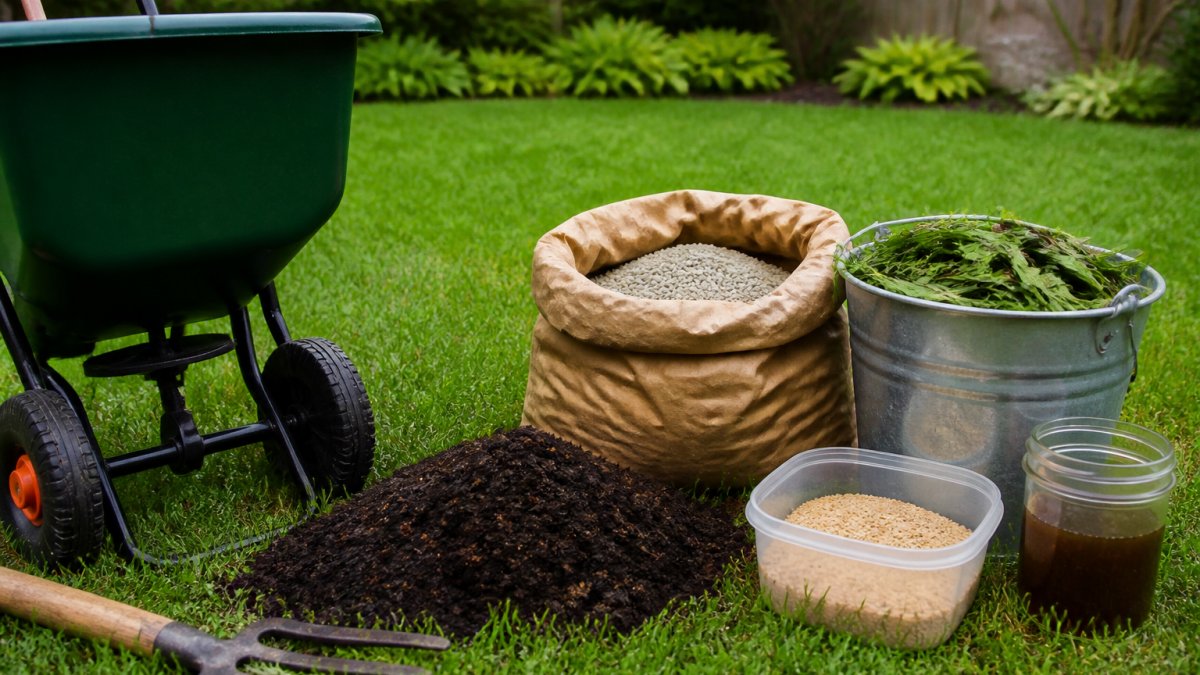
Compost is the best organic fertilizer. It adds nitrogen, phosphorus, and potassium while improving soil structure.
Grass clippings are free fertilizer.
Other organic options include well-rotted manure, bone meal (high in phosphorus), fish emulsion (quick nitrogen), and seaweed extract (trace minerals).
Apply organic fertilizer in spring when grass starts growing and again in early fall. Avoid heavy feeding in summer.
Natural Weed Control for Lawns Without Chemicals
Weeds compete with grass for water, nutrients, and light. The best defense is a thick, healthy lawn that crowds them out naturally.
Prevention is easier than removal. Keep grass at 5 to 7.5 cm; tall grass shades the soil and prevents weed seeds from germinating. Water deeply to encourage deep grass roots, not shallow weed roots.
Hand-pulling works for small infestations. Pull when soil is moist so you get the entire root; even a small piece lets the weed regrow.
Mulching bare patches stops weeds before they start.
Corn gluten meal is a natural pre-emergent herbicide.
For stubborn perennial weeds, pour boiling water directly on them. It's slow but effective and completely natural.
Month-by-Month Natural Lawn Care Calendar
Most seasonal guides tell you what to do but not how to know when to do it. This calendar is built around observable triggers, so you can shift each task a week or two earlier or later depending on your weather. Treat the months as a starting frame, not a rigid schedule.
Early spring (late March to April): wake-up and assess
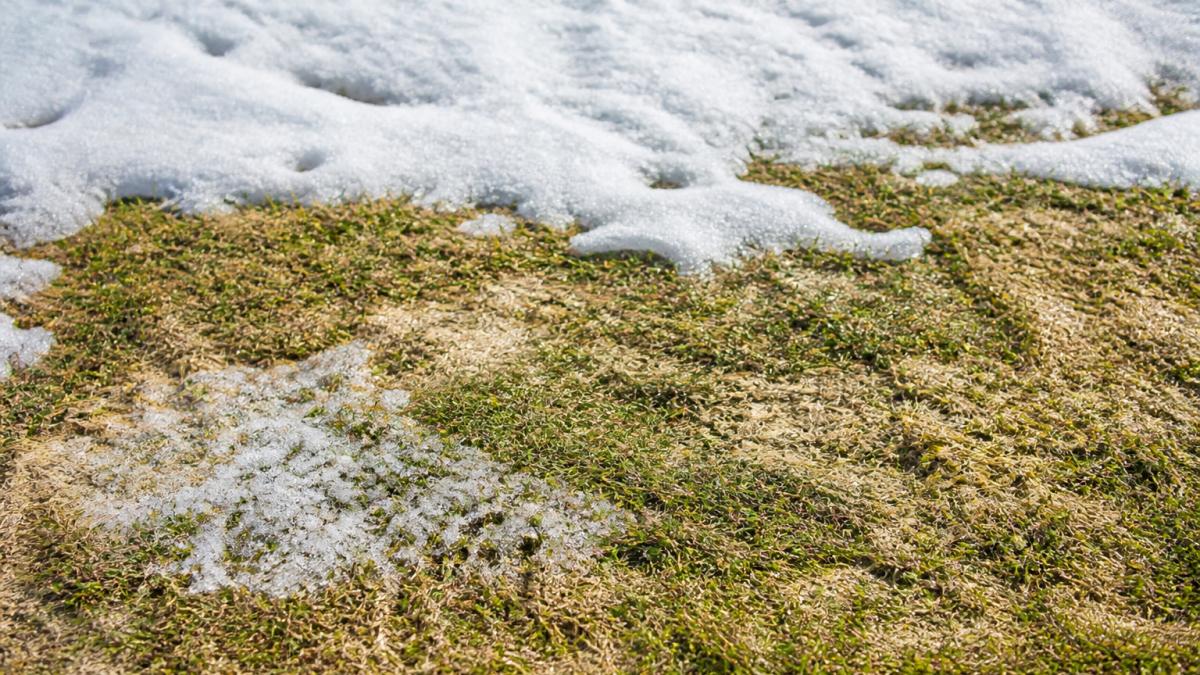
- Walk the lawn and diagnose winter damage. Look for snow mold (gray or pink patches), desiccation along driveways, and bare spots from plow damage. Rake gently to lift matted grass and improve airflow.
- Soil test if you have not tested in 2-3 years. Sample when soil is workable but not saturated.
- Sharpen and service the mower. Book blade sharpening before the first cut; spring is when small-engine shops are busiest.
Late spring (May to early June): the growth window
- First mow when grass reaches about one-third above your target height. For a 5 cm target, mow at about 7.5 cm. Cut only one-third off.
- Overseed thin areas. Cool-season seed establishes best in spring and late summer. Keep seedbed moist with light, frequent watering until germination.
- Apply corn gluten meal as a pre-emergent if you use it. Apply when soil approaches the weed-germination threshold, before seedlings emerge. It does not kill existing weeds.
Summer (late June to August): protect, do not push
- Raise mowing height by 1-2 cm during heat. Taller grass shades soil, reduces water demand, and suppresses weeds.
- Water deeply 2-3 times per week rather than daily. Check with a screwdriver: it should slide in easily to about 15 cm.
- Avoid fertilizing and seeding in peak heat. Nitrogen pushes tender growth that heat and drought will stress. Seed germination is unreliable above about 27°C soil temperature.
Early fall (late August to September): the best window of the year
- This is prime overseeding and renovation time. Soil is warm, air is cooling, and weed pressure drops. Seed germinates quickly and roots establish before winter.
- Apply compost and any needed pH amendments. Lime or sulfur takes months to move through soil, so fall application pays off by spring.
- Aerate compacted areas. Core aeration relieves compaction and improves seed-to-soil contact. Leave the plugs to break down.
Late fall (October to November): set up for winter
- Final mow at a slightly shorter height (about 5-6 cm) to reduce snow mold and matting.
- Clear leaves from the lawn. A thin layer is fine, but a thick mat smothers grass over winter.
- Apply a late-fall organic feed if your soil test calls for it. Roots continue to grow until soil approaches freezing.
Winter (December to February): plan, do not work
- Stay off frozen or saturated turf. Foot traffic on dormant, frozen grass causes crown damage that shows up as spring dead spots.
- Plan next year's soil test, seed order, and mower maintenance. Order seed early; popular cultivars sell out before spring.
- Watch for snow mold in late winter where snow sat for long periods. Rake gently once the snow clears.
Here are the key tasks and timing for natural lawn care throughout the year.
| Season | Timing | Main Tasks |
|---|---|---|
| Early spring | Late March to April | Assess winter damage, soil test, sharpen mower, hold off fertilizer |
| Late spring | May to early June | First mow, overseed thin areas, apply corn gluten meal, begin deep watering |
| Summer | Late June to August | Raise mowing height, water deeply 2-3 times weekly, avoid fertilizing, watch for grubs |
| Early fall | Late August to September | Overseed, apply compost, aerate, top-dress thin areas |
| Late fall | October to November | Final mow at shorter height, clear leaves, apply late-fall feed, winterize irrigation |
| Winter | December to February | Stay off frozen turf, plan next year, watch for snow mold |
Troubleshooting Common Lawn Problems Naturally
Even with good care, problems happen.
Brown patches or dead spots: Check soil moisture first.
Thin or sparse grass: Low nitrogen is usually the culprit.
Weeds taking over: Grass isn't thick enough to compete.
Moss growth: Moss thrives in acidic, compacted soil with poor drainage.
Insects or grubs: Healthy soil supports beneficial insects that control pests.
Most lawn problems start with soil.
Frequently Asked Questions
What are the first steps in natural lawn care for beginners?
Start by testing your soil to understand its pH and nutrient levels, then amend it with compost or organic matter. Choose grass species suited to your climate and sun exposure. Once established, water deeply but infrequently, mow at the correct height, and leave clippings to decompose. These foundational steps build healthy soil and reduce the need for synthetic inputs over time.
How often should beginners water a lawn?
Water deeply 1-2 times per week, applying about 2.5-5 cm of water per session, rather than frequent shallow watering. The goal is moist soil that encourages deep root growth. Adjust frequency based on rainfall, temperature, and soil type. Sandy soils may need more frequent watering, while clay soils retain moisture longer. Check soil moisture 7-10 cm below the surface before watering.
Can you control lawn weeds naturally without synthetic chemicals?
Yes. Natural weed control for lawns includes hand-pulling young weeds, applying mulch to suppress growth, maintaining proper mowing height to shade soil, and using organic fertilizers to strengthen grass competitiveness. For persistent weeds, spot-treat with boiling water or vinegar-based solutions. A dense, healthy turf grown with organic lawn fertilizer and proper watering naturally outcompetes weeds.
What is the best mowing height for a healthy lawn?
Mow to 5-7.5 cm height for most grass species, following the one-third rule: never remove more than one-third of the blade in a single mowing. Taller grass shades soil, reduces weed germination, and promotes deeper root growth. Keep your mower blades sharp to make clean cuts and prevent disease. Mow regularly during the growing season rather than waiting for the lawn to become overgrown.