 How-to
How to Prevent Snow Mold on Grass: A Homeowner's Guide
Last Updated: October 25, 2026
Quick Summary
Prevent snow mold by getting your lawn into winter short, dry, and open to the air. Finish fall cleanup before the first lasting snow: rake leaves, aerate compacted areas, fill bare spots, and make the final mowing cut at about 5 to 6 cm. Most cases are cosmetic and lawns usually recover on their own.
- Snow mold fungi become active when soil temperatures sit near freezing with moisture trapped at the surface.
- Aerate compacted areas and overseed thin spots six to eight weeks before the first expected snow.
- Set the final mowing height to about 5 to 6 cm and bag the clippings.
- Rake leaves before they get wet and matted, and dethatch only if the layer is thick.
- Fungicides work best as a preventive late-fall application, not on spring patches after the fact.
Table of Contents
- What Causes Snow Mold and Why It Takes Hold
- Fall Lawn Care Before Winter: The Foundation of Prevention
- The Last Lawn Mowing Before Winter: Height Matters
- Should You Rake Leaves and Dethatch Before Snow?
- Snow Mold Treatment: What to Do If It Appears
- Lawn Fungicide for Snow Mold: When It Helps and When It Doesn't
- Book a Fall Cleanup Before the First Snow
- Frequently Asked Questions
What Causes Snow Mold and Why It Takes Hold
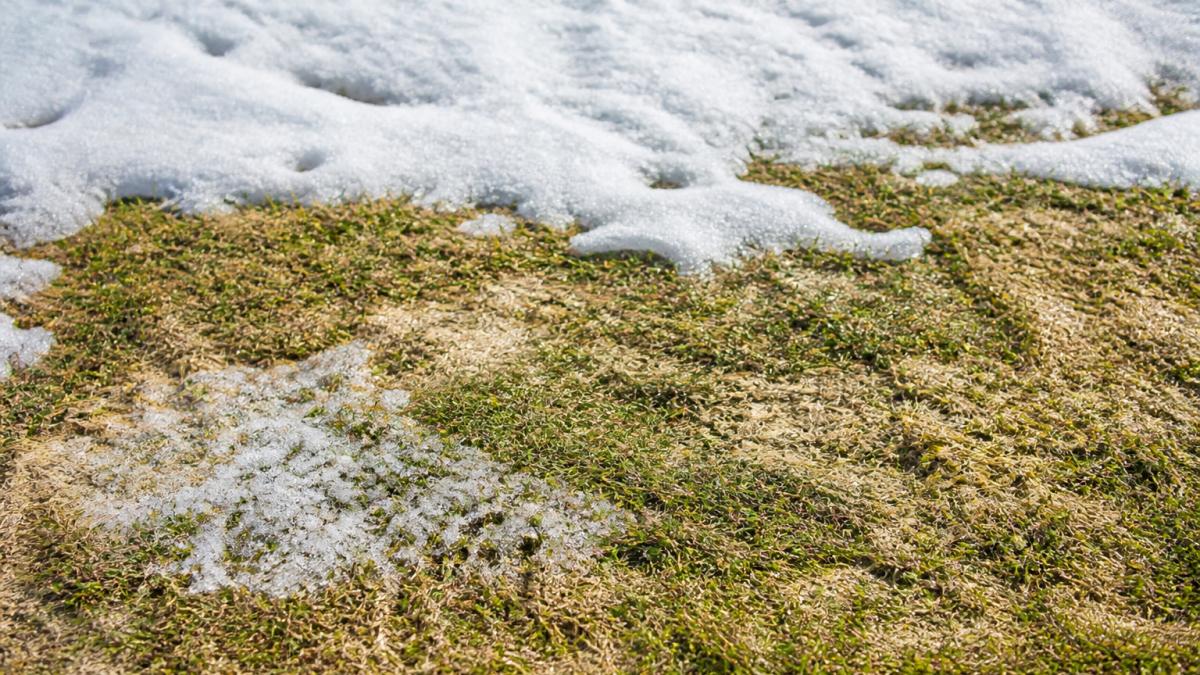
Snow mold is a lawn disease that develops under snow cover or in cold, wet weather, and it shows up as matted, straw-colored patches when the snow melts.
Two types are common. Gray snow mold looks like pale gray or white crusty patches. Pink snow mold shows a pinkish tinge and is the more damaging of the two.
Here is the part most guides get wrong: the disease is not caused by the snow itself. It is caused by the conditions you leave behind before the snow arrives.
The good news is that most cases are cosmetic. A lawn-care discussion on r/lawncare's snow mold prevention thread describes snow mold as mostly harmless, which lines up with what we see on most properties after a heavy winter.
Fall Lawn Care Before Winter: The Foundation of Prevention
Everything you do in the fall sets up how the lawn handles winter. Skip this step and no spring treatment will fully undo it.
Time the work to soil temperature, not the calendar
Snow mold fungi become active when soil temperatures sit near freezing and moisture is trapped at the surface. In most regions, that window opens once soil temperatures drop to roughly 5 to 8 °C and stay there. Practically, that means your fall cleanup should be finished before the first lasting snow, not after the first frost. A light frost is a warning, not a deadline.
A simple sequence that works for most lawns:
- Six to eight weeks before the first expected snow: aerate compacted areas and overseed thin spots so new grass has time to establish.
- Three to four weeks out: rake or blow leaves, dethatch only if needed, and trim back overhanging branches.
- One to two weeks out: do the final mowing at the correct height and bag the clippings.
- Right before snow: clear leaves from low, shaded, and drainage-poor spots one last time.
Match the routine to your grass type
Cool-season grasses such as Kentucky bluegrass, fine fescue, and perennial ryegrass are the most common snow mold hosts because they stay green late into fall.
If your lawn is a cool-season mix, the final cut height and leaf removal matter more. If it is a warm-season lawn, the bigger risk is usually leaves and debris left on dormant turf, not grass length.
The concrete fall checklist
- Keep mowing until growth clearly stalls, not until the first cold snap.
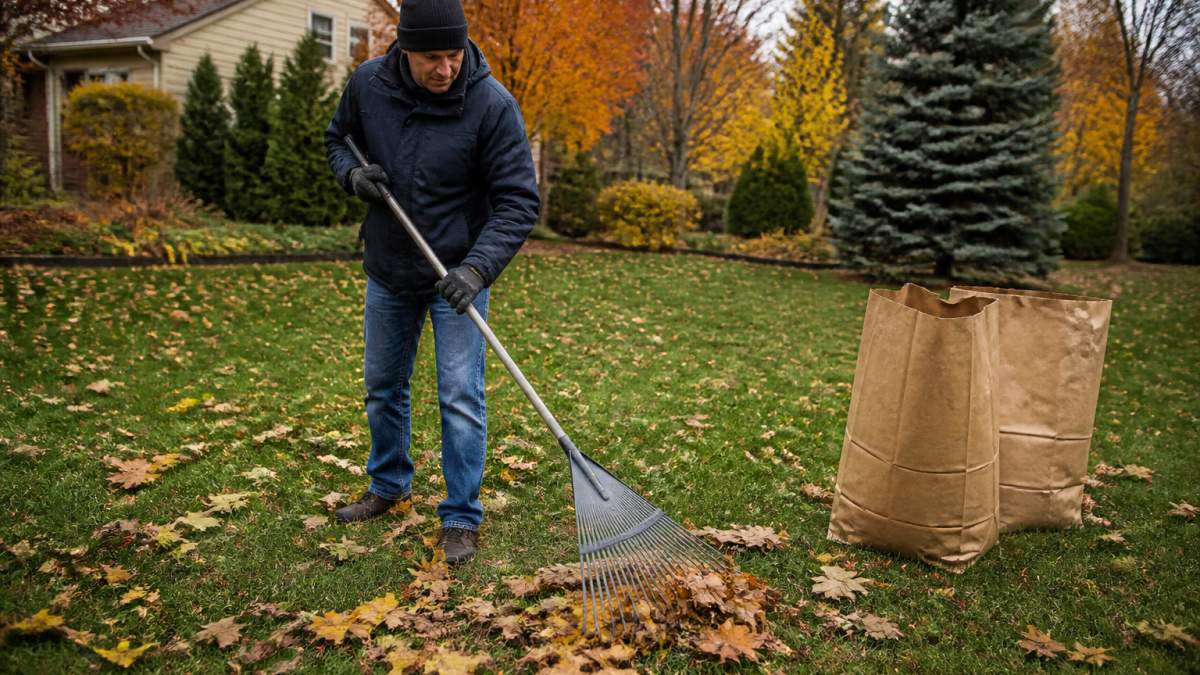
- Rake leaves before they get wet and matted, and clear them from low, shaded spots where moisture lingers.
- Aerate compacted areas so water drains and air reaches the roots.
- Fill bare spots with seed so thin turf does not stay wet.
- Trim back overhanging branches to improve light and airflow.
The goal is a lawn that goes into winter short, dry, and open to the air. Grass that stays long and smothered under wet leaves is exactly where snow mold starts.
Work backward from the first lasting snow so each fall task is finished in time.
| Timing | What to do |
|---|---|
| Six to eight weeks before first expected snow | Aerate compacted areas and overseed thin spots |
| Three to four weeks out | Rake or blow leaves, dethatch only if needed, trim overhanging branches |
| One to two weeks out | Final mowing at correct height and bag clippings |
| Right before snow | Clear leaves from low, shaded, drainage-poor spots |
The Last Lawn Mowing Before Winter: Height Matters
The last cut of the season is the single most important mowing you will do. Aim for a final height of about 5 to 6 cm going into winter.
Here is how we handle the final mowing:
- Drop the deck gradually over your last few cuts, never all at once.
- Cut when the grass is dry, not after rain.
- Bag the clippings on the final cut so they do not sit on the surface.
- Stop mowing once growth clearly stalls for the season.
A common mistake is scalping the lawn "to be safe." Cutting too low exposes the crowns and weakens the plant, which leaves it more open to disease and winter kill. Short is good.
Should You Rake Leaves and Dethatch Before Snow?
Yes, in most cases. Leaves left on the lawn over winter trap moisture and block light, which is exactly what snow mold needs.
Thatch is the brown layer of dead stems and roots between the grass and the soil. A thin layer is fine.
- Rake leaves before they get wet and matted
- Dethatch only if the layer is thick, not as a yearly habit
- Bag or compost the debris rather than leaving it piled on the lawn
- Clear leaves from low, shaded spots where moisture lingers
If you are not sure whether your lawn needs dethatching, a quick check with a rake or a handful of turf tells you fast.
Snow Mold Treatment: What to Do If It Appears
Snow mold treatment starts the moment the snow clears. Do not wait for warm weather to fix it. The most useful thing you can do is understand what is normal in the days and weeks after melt, what is not, and how to tell snow mold apart from winter kill, grub damage, or disease.
What to expect, day by day and week by week
- Days 1 to 3 after melt: Patches look matted, straw-colored, and sometimes crusty. Gray snow mold shows pale gray or white crust; pink snow mold has a pinkish tinge and is the more damaging type. This is the normal appearance.
- Days 4 to 10: Gently rake or fluff the patches. Mild cases start to green up at the edges as air and light reach the crowns.
- Weeks 2 to 4: Most home lawns show new growth filling in from the edges. Bare centers may remain where the crown was killed.
- Weeks 4 to 8: Thin or bare spots are ready for light overseeding once soil warms and night temperatures stay above roughly 10 °C.
Distinguish snow mold from look-alikes
Not every brown patch is snow mold. Use these cues:
- Snow mold: circular patches, matted grass, crusty or pinkish surface, often along snow-drift lines and shaded areas.
- Winter kill or desiccation: uniform browning on exposed, windy sites, no crust, crowns may still be firm and green at the base.
- Grub damage: spongy turf that pulls up easily like a carpet, often in late summer or fall, not right at melt.
- Dollar spot or other disease: smaller spots, distinct lesions, and a pattern that spreads in warm, humid weather rather than under snow.
If patches keep spreading after a couple of weeks of raking and warmer weather, that points to something beyond ordinary snow mold, and it is worth a closer look before you treat blindly.
Species and site differences in recovery
Recovery depends on grass type, age, health, and how much live growth was smothered. Cool-season grasses usually recover from mild gray snow mold within two to four weeks. Pink snow mold can kill crowns and leave bare spots that need overseeding. Shaded, poorly drained, and heavily thatched lawns recover slower and are more likely to see repeat damage next winter.
A step-by-step recovery plan
- Fluff, don't scrub. Lightly rake matted patches to restore airflow.
- Remove dead grass so crowns can breathe, but leave healthy crowns intact.
- Stay off wet, thawing turf to avoid compaction.
- Hold heavy fertilizer until the grass is actively growing, then use a light application.
- Overseed bare patches once soil warms and night temperatures hold.
- Fix the cause, long grass, matted leaves, poor drainage, or thick thatch, before next winter.
Most lawns bounce back within a few weeks of raking and warmer weather. If a patch is still bare after four to six weeks, or if dieback keeps expanding, that is the point to call a lawn professional or plan to replace the damaged area rather than keep treating it.
Lawn Fungicide for Snow Mold: When It Helps and When It Doesn't
Lawn fungicide for snow mold is rarely the answer for a typical home lawn. Fungicides work best as a preventive measure applied in late fall, before snow cover, and only on lawns with a history of serious, recurring problems.
When it makes sense:
- The lawn has had heavy, repeated snow mold damage in past winters
- You are managing a large or high-value property where damage is costly
- A professional has confirmed the disease and the right timing
When it does not:
- You are treating visible spring patches after the fact
- The real problem is long grass, matted leaves, or poor drainage
- You are applying it without fixing the conditions that caused it
For most homeowners, better airflow, a shorter final cut, and clean fall cleanup do more than any spray. If you are weighing a treatment, talk to a lawn professional about timing first, because applied at the wrong point in the season it is money wasted.
Book a Fall Cleanup Before the First Snow
The most reliable way to prevent snow mold is to get the lawn into winter in good shape, and that work has a deadline: the first lasting snow. Once the snow settles, your window closes.
At Bigfoot Landscaping & Contracting, we handle the fall work that keeps lawns healthy through winter.
Get a free estimate and let us get your lawn ready for winter.
Frequently Asked Questions
What causes snow mold on grass?
Snow mold is a fungal disease that develops when grass stays wet and covered through winter. The two main types, gray snow mold and pink snow mold, grow under snow cover or in cold, wet conditions when air circulation is poor. Matting leaves, tall grass, and thatch trap moisture against the soil and give the fungus a place to spread. Preventing snow mold starts with reducing that trapped moisture before the first snowfall.
Should I mow the lawn short before winter to prevent snow mold?
Yes, but not too short. Cutting grass to about 5 to 6 centimetres for the last lawn mowing before winter reduces the matted growth that holds moisture and invites snow mold. Avoid scalping the lawn, since cutting into the crown weakens grass and leaves it more exposed to cold damage. Sharpen your mower blade first so the cuts are clean and the grass recovers before dormancy.
Will grass recover from snow mold on its own?
Most light cases of snow mold recover on their own once the snow melts and the lawn dries out. Rake the affected areas gently to loosen matted grass and improve air circulation, which helps the grass dry and regrow. If the damage is severe, or if pink snow mold is spreading, a snow mold treatment such as overseeding and light fertilization may be needed. Wait until the soil is workable and the grass is actively growing before you act.
Should I use fungicide to prevent snow mold?
A lawn fungicide for snow mold is usually a last resort, not a routine step. It works best when applied preventively in late fall on lawns with a history of severe snow mold, and timing is critical. For most homeowners, proper fall lawn care before winter, including leaf removal, dethatching, and the right mowing height, prevents snow mold without chemicals. If you are unsure whether fungicide is warranted, ask a lawn care professional to assess your lawn first.