 How-to
Choosing the Right Drainage Pipe for Landscaping
Quick Summary
Choose a drainage pipe by first observing where water pools and runs after heavy rain, then matching the pipe to that flow. Use smooth-wall PVC for straight runs carrying steady flow and corrugated pipe for short, flexible runs around obstacles. Perforated pipe collects water from the ground, while solid pipe carries it to an outlet.
- Walk the yard after heavy rain to note where water pools and which spots stay soggy.
- Smooth-wall PVC suits straight runs with steady flow; its interior moves water quickly.
- Corrugated pipe bends easily around obstacles, but its ribbed interior can trap sediment.
- Size the pipe for the heaviest inflow, and step up a diameter when using corrugated pipe on long runs.
- Aim for a fall of about one to two per cent so water drains by gravity without sitting in the pipe.
Table of Contents
- PVC vs. Corrugated Drainage Pipe: How They Compare
- Perforated vs. Solid Drain Pipe: Which Does Which Job
- French Drain Pipe Size: Diameter and Capacity
- Landscape Drainage Pipe Slope and Burial Depth
- Soil, Permits and Discharge Rules to Check First
- Booking a Site Assessment Before You Dig
- Frequently Asked Questions
Start with the problem you are solving, because the right pipe depends on what the water is doing. Before you buy anything, walk the yard after a heavy rain and note where water pools, where it runs off, and which spots stay soggy for days. Those observations decide almost everything else in this guide.
A yard that floods in one corner often has a drainage problem that a single pipe run can solve, while a yard that stays wet across its whole width often needs a more deliberate system. Starting with that walk-through matters, because a pipe chosen without it is a guess.
Most people focus on the pipe first. A better starting point is the question of where the water needs to go, how much of it there is, and what the ground above the pipe will be used for. A lawn, a patio, and a garden bed each place different demands on the trench and the pipe.
Here is how to frame it before you shop:
- Source: roof downspouts, surface runoff from a slope, or groundwater seeping up from below.
- Destination: a storm sewer connection, a dry well, a lower part of the lot, or a permitted discharge point.
- Load above: foot traffic only, a lawn you mow, or a driveway that carries a vehicle.
Watch out: running a pipe to the nearest low spot without checking where the water ends up can move the flooding onto a neighbour's property, which is both a practical and a legal problem in Toronto.
PVC vs. Corrugated Drainage Pipe: How They Compare
PVC and corrugated pipe are the two options you will see most often at a supply yard, and they behave differently in the ground. Rigid PVC has a smooth interior, so water moves through it quickly and debris has less to catch on. Corrugated pipe is flexible and lighter to handle, which makes it faster to bend around tree roots and obstacles, but the ribbed interior can trap sediment and slow flow.
For a straight run that needs to carry a steady flow, smooth-wall PVC is usually the stronger choice. For a short, flexible run in a bed where you need to snake around features, corrugated pipe can be practical. Neither is universally better, and the answer depends on the route and how much flow you expect.
Pricing depends on pipe diameter, the length you need, and the supplier, so check current rates with your local supplier or request a quote from Bigfoot Landscaping & Contracting's website rather than relying on a single figure.
The two most common options differ in how they handle water and how easily they bend around obstacles.
| Pipe type | Best for | Key difference |
|---|---|---|
| Smooth-wall PVC | Straight runs carrying steady flow | Smooth interior moves water quickly, less debris catch |
| Corrugated pipe | Short, flexible runs around obstacles | Lighter and bends easily, ribbed interior traps sediment and slows flow |
Perforated vs. Solid Drain Pipe: Which Does Which Job
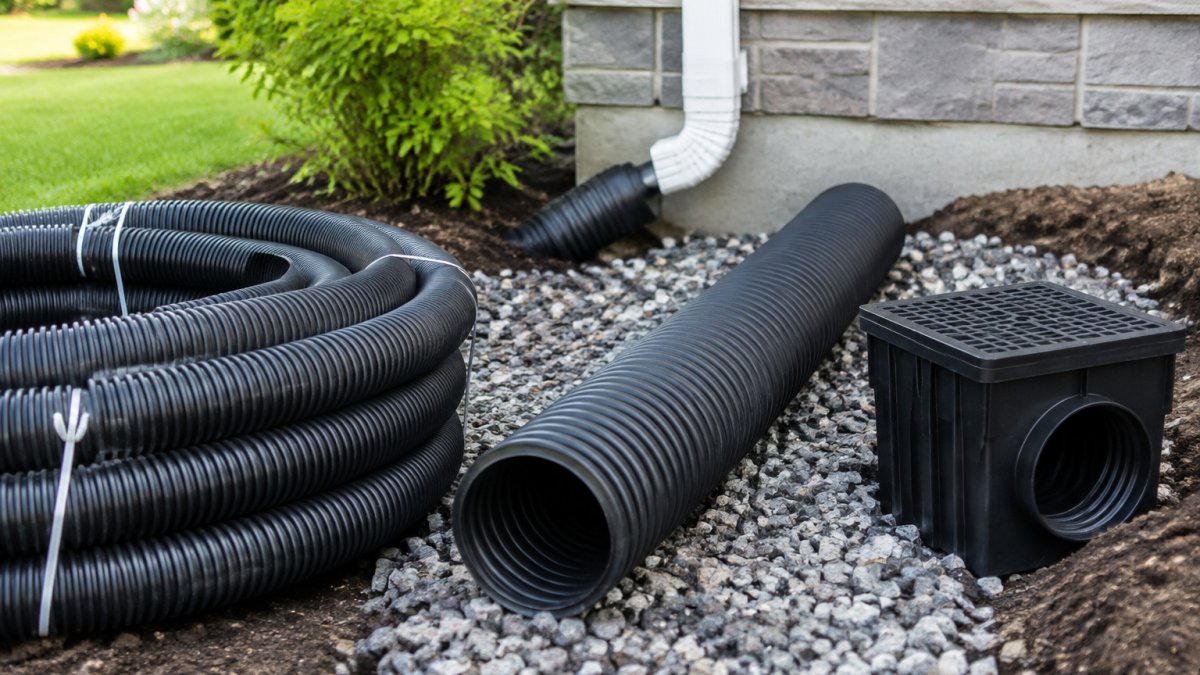
Perforated pipe has holes or slots that let water enter along its length, which is why it sits at the heart of most French drain designs. Solid pipe has no openings and is meant to carry water from one point to another without collecting it along the way. Using the wrong type is one of the most common mistakes we see: solid pipe in a French drain collects nothing, and perforated pipe used as a discharge line leaks water back into the soil before it reaches its destination.
A practical rule: perforated pipe goes where you need water collected from the surrounding ground, and solid pipe goes where you need water transported to a discharge point. Many systems use both, with perforated pipe in the collection trench and solid pipe running from there to the outlet.
French Drain Pipe Size: Diameter and Capacity
Diameter decides how much water the pipe can carry, and it is a common source of undersized installations. A pipe that looks adequate for a light summer shower can overflow during a sustained storm. When sizing, consider the catchment area that drains into the pipe and the rainfall intensity you need to handle, then choose a diameter with headroom rather than the minimum that will barely work.
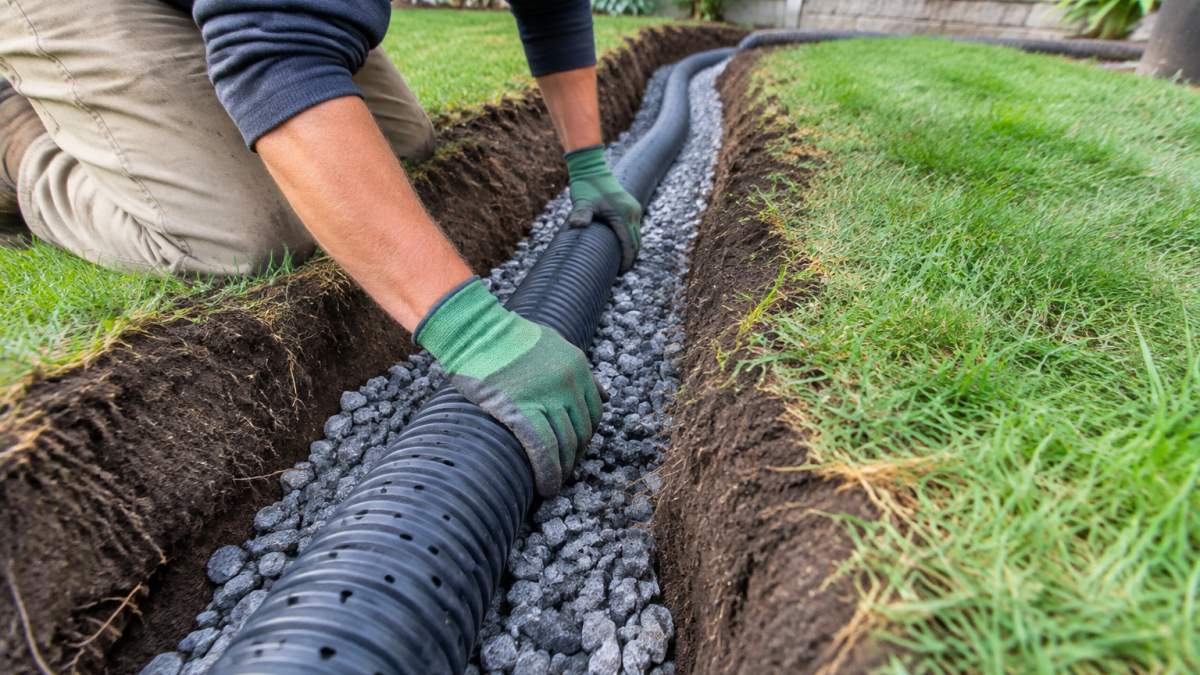
Most residential landscape drains use nominal pipe sizes of 3 inch, 4 inch, or 6 inch. The 4 inch size is the default for a single-yard French drain because it balances capacity against trench width and gravel volume, but it is not a universal answer. A 3 inch pipe can serve a short run from one downspout, while a 6 inch pipe is more appropriate where several downspouts, a sloped side yard, and a patio all discharge into the same line.
Capacity is not set by diameter alone. Flow through a gravity pipe depends on the pipe's internal roughness, its diameter, and the slope. A smooth-wall PVC pipe carries more water at the same diameter and pitch than a corrugated pipe, because the ribs create turbulence and slow the flow. That means a corrugated line may need a larger diameter or a steeper pitch to move the same volume as a smooth PVC line.
A practical way to think about sizing without a full hydraulic calculation is to count the inflows. Add up the roof area served by each downspout, the surface area of any paved or sloped ground that drains toward the trench, and the length of the collection run. A 30-metre run collecting runoff from a sloped side yard will need more capacity than a 6-metre run under a single downspout.
Pitch and diameter trade off against each other. A smaller pipe on a steeper slope can carry more than the same pipe laid nearly flat, but steep slopes erode trench bedding and can cause the water to outrun the surrounding gravel. A common target for landscape drains is a fall of about one to two per cent, which is roughly one centimetre per metre of run.
Watch out: a pipe sized to the average flow rather than the peak will back up during the storm that matters most. Size for the heaviest inflow the line will see, and confirm the outlet can pass that volume before you bury anything.
Landscape Drainage Pipe Slope and Burial Depth
Water moves through a drain pipe by gravity, so the pipe has to fall in the direction of flow. A level pipe does not drain, and water sits in it, promotes sediment build-up, and eventually blocks the line. A pitch of roughly one to two per cent is a widely used target for landscape drains, meaning the pipe drops about one centimetre for every metre of run. Steeper slopes can cause the water to outrun the gravel around the pipe and erode the trench, so avoid overdoing it.
Burial depth matters for two reasons. The pipe needs enough cover to survive foot traffic, lawn equipment, and frost, and it needs to sit low enough to intercept groundwater where you need it. Frost depth means you should confirm the local requirement before setting pipe in an exposed location, and a pipe too shallow under a driveway can crack under load.
Watch out: a pipe that sags after backfilling will form a low spot where sediment collects. Compact the bedding evenly and check the slope again after the trench settles.
Soil, Permits and Discharge Rules to Check First
Soil type changes how water moves and, in turn, which pipe and filter design will actually work. Heavy clay drains slowly and holds water near the surface, so a perforated pipe in clay can sit in saturated ground and collect little unless the trench is generously surrounded with washed stone and wrapped in geotextile to keep fines out. Sandy soil lets water pass through quickly, which means the water you collect may soak away before it reaches the outlet, a solid discharge line to a defined outlet is often the better choice there.
Groundwater matters as much as surface soil. A seasonal high water table can keep a French drain trench permanently wet, which shortens the life of the pipe and speeds sediment build-up. If the water is seeping up from below rather than running across the surface, a collection trench alone may not solve it, and the design may need a deeper outlet or a sump. Watch the yard in spring and after long storms to see whether the wet spots are surface runoff or groundwater, because the two call for different pipe layouts.
The filter design around a perforated pipe is where many French drains fail early. The pipe should be bedded in washed, angular stone rather than rounded river rock, because angular stone interlocks and leaves voids for water to move. Wrap the stone and pipe in a non-woven geotextile that lets water through but blocks soil particles, and lap the fabric over the top of the stone before backfilling. Without that separation, fine soil migrates into the stone and pipe, and the drain silts up within a few seasons.
Before you dig, check the rules that apply to your property. Discharge of water onto neighbouring land or into the public right-of-way is restricted in many municipalities, and some connections require approval from the local authority. Locate buried utilities before excavating by calling Ontario One Call, and confirm whether a permit is needed for your project. Rules change and vary by municipality, so verify current requirements with your local building department rather than relying on what a neighbour did.
Ontario One Call utility locate service
Watch out: backfilling with native soil directly against a perforated pipe, with no stone and no fabric, is the single most common reason a new French drain stops working within a few years.
Booking a Site Assessment Before You Dig
Choosing the right pipe is easier with someone who has seen the site. If you want help matching pipe type, diameter, slope, and outlet to your specific yard, book a site assessment with Bigfoot Landscaping & Contracting. You can book a drainage site assessment to get started.
Frequently Asked Questions
What type of pipe is best for landscape drainage?
For most residential yards, rigid PVC is the first choice because it resists crushing and keeps a smooth interior that carries water well. Corrugated pipe is lighter and cheaper per metre, which suits shorter runs and lighter loads. The right answer depends on how much weight sits above the pipe, how far water must travel, and whether the run needs to be cleaned with a camera or jetting later. Match the material to the job before you compare prices.
Should I use PVC or corrugated pipe for yard drainage?
Use PVC when the pipe runs under a driveway, patio or any area that takes heavy loads, or when you want a smooth bore that clears easily. Corrugated pipe works well for lawn French drains and downspout extensions where loads are light and the run is short. Corrugated pipe can trap sediment in its ridges, so plan for periodic flushing. Get a quote for both options so you can compare installed costs in CAD.
Does a drainage pipe need a slope?
Yes. Water in a drainage pipe moves by gravity, so the pipe needs a consistent fall toward the outlet. A common guideline is about 1 per cent slope, roughly 1 cm of drop per metre of run, though local requirements and site conditions can call for more. Without enough fall, water and sediment sit in the pipe and the system clogs. Check the slope with a level or laser before you backfill the trench.
How deep should a landscape drainage pipe be buried?
Burial depth depends on the surface load and the frost line in your area. Pipes under lawns are often set about 30 to 45 cm deep, while pipes under driveways need deeper cover and proper bedding to avoid crushing. Confirm utility locations before digging and check local rules for discharge points. A site assessment can confirm the right depth for your yard.