 Comparison
Mulch vs Compost for Gardens: Which One Do You Need?
Last Updated: November 20, 2026
Quick Summary
Mulch vs compost comes down to purpose: mulch is a protective layer laid on top of the soil, while compost is decomposed organic matter mixed into it. If your soil is dry, crusted or weedy, mulch is usually the first fix; if it is thin, sandy or compacted, compost does more of the work.
- Mulch shields bare soil from sun, wind and heavy rain, and slows moisture loss.
- Compost improves soil structure and feeds microorganisms and plant roots.
- For most garden beds, spread mulch about 5 to 8 centimetres (2 to 3 inches) deep.
- Keep mulch a few centimetres clear of plant stems and never pile it against tree trunks.
- Finished compost is dark, crumbly and earthy-smelling; a sour smell means it needs more time.
Table of Contents
- Mulch and Compost Do Different Jobs in the Garden
- What Mulch Is and How It Protects Your Soil
- What Compost Is and How It Feeds Your Soil
- How to Apply Mulch to Garden Beds, Including Mulch Depth
- Can Compost Work as Mulch, and Can You Layer Both?
- Choosing Between Mulch and Compost by Plant Type and Season
- Risks, Costs and Material Quality to Check Before You Buy
- Planning Your Bed Care With Bigfoot Landscaping & Contracting
- Frequently Asked Questions
Mulch and Compost Do Different Jobs in the Garden
Mulch covers the soil surface, while compost is mixed into it. That single difference, the core of the mulch vs compost decision, drives almost every choice you will make about which one to buy.
Mulch works as a protective layer. It shields bare soil from sun, wind and heavy rain, and it slows the loss of moisture. Compost works as a food source. Its decomposing organic matter improves soil structure and feeds the microorganisms and plant roots that depend on it.
Here is the simplest way to think about it. If your soil looks dry, crusted or weedy, mulch is usually the first fix. If your soil is thin, sandy or compacted, compost does more of the heavy lifting.
What Mulch Is and How It Protects Your Soil
Mulch is a layer of material placed on top of the soil. Common organic options include wood chips, shredded bark, pine needles, straw and leaves. Inorganic options such as gravel or rubber exist, but most home gardeners choose organic mulch because it breaks down and adds some organic matter over time.
Mulch earns its place in three main ways:
- Weed suppression: A layer blocks the light that weed seeds need to germinate.
- Moisture retention: It reduces evaporation, so beds need watering less often.
- Temperature moderation: It insulates roots from summer heat and winter freezes.
A common mistake is using mulch that is too fine or too rich. Fine material can form a crust that sheds water, and bare wood left in contact with nitrogen-hungry soil can temporarily tie up nutrients. Choose a coarse, well-aged product and keep it away from direct contact with plant stems and tree trunks.
What Compost Is and How It Feeds Your Soil
Compost is decomposed organic material, such as kitchen scraps, yard waste and leaves, that has broken down into a dark, crumbly humus. Finished compost smells earthy. If it still smells sour, or you can recognize the original food scraps, it needs more time.
Mixed into soil, compost helps in several ways:
- It improves structure, helping clay drain and sandy soil hold water.
- It adds a steady supply of nutrients as it continues to break down.
- It supports the soil organisms that keep plant roots healthy.
The practical takeaway is that compost is a soil amendment, not a surface cover. Spread it on top and leave it there, and much of its benefit is lost to surface drying and wind.
How to Apply Mulch to Garden Beds, Including Mulch Depth
Start by clearing weeds and pulling out any mulch that has broken down into a thin, matted layer. Water the bed thoroughly before you spread anything new, so the soil is moist when the mulch goes down.
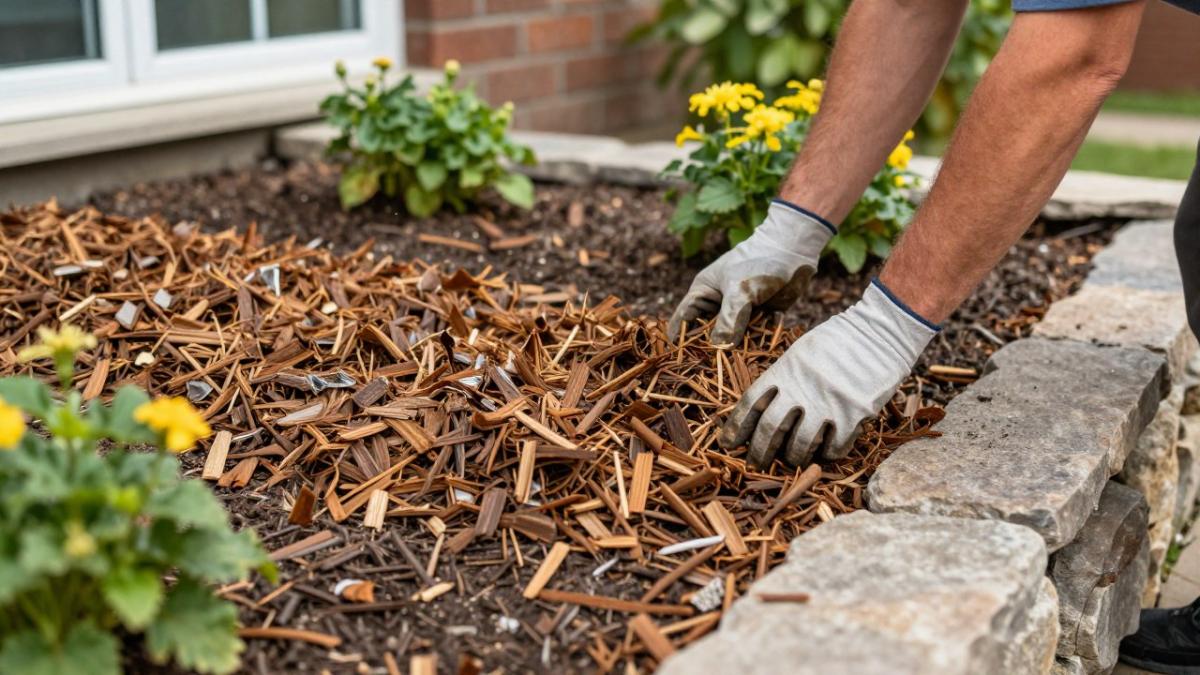
Spread mulch evenly across the bed, keeping it a few centimetres clear of plant stems and the base of shrubs and trees. Mulch piled against stems traps moisture and invites rot.
Mulch Depth for Garden Beds
For most garden beds, a layer of about 5 to 8 centimetres (2 to 3 inches) is a sound target. Fine materials should sit closer to the lower end of that range, since they pack down and block air. Coarse wood chips can go a little deeper.
Check depth every season. Mulch decomposes and settles, so a bed that was properly covered in spring may be thin by late summer. Top it up rather than letting bare soil show through.
Can Compost Work as Mulch, and Can You Layer Both?
Yes, compost can be used as mulch. A thin layer of finished compost on the surface acts as a fertility boost and helps keep moisture in. The trade-off in any mulch vs compost comparison is that it is more prone to washing away in heavy rain and does little to block weeds compared with a coarse mulch.
Layering both works well in many gardens. Work compost into the top layer of soil in spring to feed the bed, then cover it with a protective mulch layer once plants are established. This gives you the feeding benefit of compost and the protective benefit of mulch in one routine.
Avoid piling thick compost directly against stems, and keep an eye on drainage in beds that already stay wet.
Choosing Between Mulch and Compost by Plant Type and Season
The right choice depends on what you are growing and when. Use this guide to match the material to the bed rather than defaulting to one product everywhere.
Vegetable beds. Work 5 to 8 centimetres of finished compost into the top 15 to 20 centimetres of soil before planting. Once seedlings are established and the soil has warmed, apply a 5-centimetre layer of straw, shredded leaves, or well-aged wood chips. Keep mulch 2 to 3 centimetres away from stems to prevent rot and slug pressure. In autumn, after harvest, either plant a cover crop or lay 8 to 10 centimetres of leaves over the bed; the leaves break down over winter and can be turned in the following spring.
Perennial and shrub beds. A coarse organic mulch is the default. Apply 7 to 10 centimetres of wood chips or shredded bark in late spring, after the soil has warmed but before summer heat arrives. Each spring, spread 2 to 3 centimetres of compost around the drip line and scratch it into the surface, then top up the mulch to its original depth.
Trees and shrubs. Keep mulch 15 to 30 centimetres away from the trunk. A mulch volcano piled against bark traps moisture and can lead to decay and rodent damage. A flat ring of 8 to 10 centimetres of coarse wood chips, extending to the drip line, is the standard pattern. Compost is best applied as a thin 2-centimetre layer over the root zone in spring, not mounded at the trunk.
Containers and raised beds. Compost is the primary ingredient because container mixes are low in organic matter and nutrients. Blend compost at roughly one part compost to three parts existing mix when refreshing a container. A 2- to 3-centimetre topdressing of compost mid-season feeds plants without burying crowns.
Seasonal timing. In spring, wait until the soil has warmed and drained before mulching; a thick layer over cold, wet ground slows warming and keeps beds soggy. In summer, prioritize mulch on beds that dry out quickly, and water deeply before applying it so the soil is moist underneath. In autumn, mulch protects bare soil from erosion and freeze-thaw heaving, but keep it away from the crowns of tender perennials until they have gone dormant.
Watch out: applying compost as a thick surface layer in autumn on beds that stay wet can leave roots sitting in saturated material through winter; keep compost thinner than mulch and only where drainage is adequate.
The right material depends on the bed, so the table below matches each garden area to its typical mulch or compost depth from the article.
| Garden area | Material | Typical depth |
|---|---|---|
| Vegetable beds | Finished compost, worked into top soil | 5 to 8 cm |
| Vegetable beds | Straw, shredded leaves or aged wood chips | 5 cm |
| Perennial and shrub beds | Coarse wood chips or shredded bark | 7 to 10 cm |
| Trees and shrubs | Coarse wood chips, flat ring to drip line | 8 to 10 cm |
| Containers and raised beds | Compost topdressing | 2 to 3 cm |
| Containers and raised beds | Shredded leaves, optional mulch | 1 to 2 cm |
Recommended mulch depth by garden area
Risks, Costs and Material Quality to Check Before You Buy
Quality varies widely, and the wrong product can set a bed back rather than help it. Check the material before it goes on the garden.
Nitrogen tie-up. Fresh wood chips, sawdust, and uncomposted straw have a high carbon-to-nitrogen ratio. When they are mixed into soil, soil microbes draw nitrogen from the surrounding soil to break them down, which can temporarily starve plants.
Compost maturity and contamination. Finished compost should be dark, crumbly, and earthy-smelling. A simple check is to seal a sample in a bag for a day and smell it when opened; a sour or ammonia smell means it is still maturing. Visible plastic, glass, or undecomposed food scraps are signs of poor screening.
Mulch quality. Bagged mulch may contain fillers, dyes, or recycled wood that includes treated lumber. For vegetable gardens, choose untreated wood, straw, or leaves. Cocoa hull mulch is toxic to dogs if eaten, so avoid it in yards with pets. Fresh bark or chips from diseased trees should not be used around susceptible species.
Moisture and drainage risks. A thick mulch layer over poorly drained soil can keep the root zone too wet and encourage root rot. In beds that already stay wet, use a thinner layer (3 to 5 centimetres) and keep it several centimetres back from stems.
Settling and loss. Fine mulches settle and mat, and light materials such as leaves can blow away. Coarse wood chips last longer and stay in place better on windy sites. Check depth after heavy rain and top up thin spots rather than letting bare soil show.
Costs. Bagged material is convenient for small beds but costs more per volume than bulk delivery. For a rough budget, measure bed area and multiply by the desired depth in metres to get cubic metres; a 10-square-metre bed at 5 centimetres deep needs about 0.5 cubic metres of material.
Using both together over time. Work compost into the soil in spring, then mulch the surface once plants are established. As the mulch breaks down, it adds organic matter at the surface; replenish it when the layer thins to about half its original depth.
Planning Your Bed Care With Bigfoot Landscaping & Contracting
Bigfoot landscaping & contracting offers mulching and garden maintenance services for residential and commercial properties. Coarse organic mulch for protection, combined with compost worked into the soil each spring, is a common approach gardeners take.
If you want the work done for you, or you are not sure which material your soil needs, contact Bigfoot landscaping & contracting for a free estimate and current pricing on our website. Pricing depends on quantity, dates, and delivery.
Frequently Asked Questions
What is the difference between mulch and compost?
Mulch is a protective layer placed on the soil surface to slow water loss, suppress weeds and moderate soil temperature. Compost is decomposed organic matter that is mixed into or spread over soil to improve its structure, fertility and the life within it. Mulch mostly protects the soil, while compost mostly feeds it. Many gardeners use both, but they serve different purposes and are placed differently.
Can compost be used as mulch?
Yes. Finished compost can be spread as a thin top dressing over garden beds, which gives the soil nutrients and also covers the surface. Compost breaks down faster than bark or wood chips, so it needs replacing more often. For weed suppression and moisture retention, a coarser organic mulch usually lasts longer, so compost is best used as a feeding layer rather than your only mulch.
Can you put compost on top of mulch?
You can, but apply it carefully. Add a thin layer of compost over the soil first, then top it with mulch, or lift the mulch aside, spread the compost, and pull the mulch back. Avoid piling thick compost against plant stems. Once a season, a light compost top dressing under fresh mulch is a practical way to feed beds without removing the mulch layer.
How thick should compost or mulch be?
Most garden beds do well with 5 to 8 cm of mulch, kept clear of plant stems and tree trunks. Compost is usually spread much thinner, about 1 to 2 cm as a top dressing, or mixed into the top 15 to 20 cm of soil when preparing a new bed. Too much mulch can hold excess moisture and encourage rot, so measure rather than guess.