 How-to
Are Cover Crops Worth Growing in Raised Beds?
Last Updated: November 19, 2026
Quick Summary
Yes, cover crops are worth growing in raised beds. They protect bare soil from erosion, crowd out weeds, and add organic matter when cut down, and legume types fix nitrogen for the vegetables that follow.
- Cover crops protect bare soil from erosion and keep the bed working through the off-season.
- Legumes like clover and field peas fix nitrogen that becomes available to the next crop.
- Buckwheat and annual ryegrass are especially good at crowding out weeds in small beds.
- Cut most cover crops at flowering, and cut winter rye at boot stage before it heads out.
- Wait at least three weeks after rye residue before direct-seeding small vegetables.
Table of Contents
- Why Cover Crops Belong in Raised Beds
- How Cover Crops Build Soil Health and Fix Nitrogen
- Best Cover Crops for Raised Beds
- Cover Crops for Weed Suppression in Small Beds
- How to Plant Cover Crops in a Raised Bed
- When to Cut Down Cover Crops Before Planting
- Booking Help for Your Raised Bed Planning This Season
- Frequently Asked Questions
Cover crops are usually grown on farms, but they belong in backyard raised beds too. Gardeners often leave beds empty for months after harvest, then wonder why the soil is compacted and weeds have moved in. A simple cover crop can fill that gap. Below, we explain what cover crops do for small beds, which ones suit them best, and how to plant and end them without fuss.
Why Cover Crops Belong in Raised Beds
A cover crop is a plant grown mainly to protect and improve the soil rather than to be harvested. Raised beds are a good fit for them because the soil is contained, warms up faster, and dries out more quickly than in-ground plots.
Leaving a bed bare can invite problems. Rain can wash away loose topsoil, and sun can bake the surface. Cover crops hold soil in place and keep the bed working through the off-season.
- They protect bare soil from erosion
- They add organic matter when they are cut down
- They crowd out weeds before they can set seed
- They give you a green bed to plant into next spring
How Cover Crops Build Soil Health and Fix Nitrogen
Legume cover crops such as clover and field peas work with bacteria in their roots to pull nitrogen from the air and store it in the soil. This is called nitrogen fixation. When the plant is cut and left to break down, that nitrogen becomes available to the vegetables that follow.
Root growth matters too. Roots loosen compacted soil and leave channels that help water drain and air move through the bed. Over a few seasons, that can make the soil easier to work.
Cutting the plants and leaving the residue on top adds organic matter. Organic matter helps soil hold water and nutrients, which many raised bed gardeners find helpful in a container-like space.
Best Cover Crops for Raised Beds
Raised beds are shallow, warm fast, and dry out quickly, so the best cover crop is the one that matches your season, your next crop, and the depth of your soil. The table below gives the practical numbers most seed packets and extension guides use for small beds.
| Crop | Type | Best planting window | Seeding rate for 100 sq ft | Cold tolerance | Main benefit | Main trade-off |
|---|---|---|---|---|---|---|
| Crimson clover | Legume | Late summer to early fall | 4-6 oz | Killed by hard frost (roughly -10°C and below) | Fixes nitrogen, attracts pollinators | Can reseed if allowed to flower |
| Field peas | Legume | Early spring or late summer | 8-12 oz | Killed by hard frost | Fast nitrogen, edible shoots | Vines sprawl and can smother small seedlings |
| Winter rye (cereal rye) | Grass | Early fall | 6-8 oz | Survives winter in most of Canada | Holds soil, scavenges leftover nitrogen | Woody stems, allelopathic residue that can suppress small seeds |
| Buckwheat | Broadleaf | Late spring to midsummer | 6-8 oz | Killed by light frost | Fast weed suppression, flowers feed beneficial insects | Goes to seed in about 30-35 days, so timing is tight |
| Annual ryegrass | Grass | Early fall or early spring | 4-6 oz | Semi-hardy; may winter-kill in cold zones | Dense fibrous roots, quick cover | Can become a weed if it sets seed |
| Hairy vetch | Legume | Late summer to early fall | 4-6 oz | Hardy in many regions | High nitrogen fixation, winter cover | Aggressive vining habit, hard to kill in spring |
| Oats | Grass | Early fall | 8-10 oz | Winter-killed in most of Canada | Quick biomass, easy to terminate | Little nitrogen contribution |
Seeding rate for 100 sq ft
Match the crop to the season. In a raised bed you usually have two windows: a fall window after harvest and a spring window before the next planting. For fall, winter rye, crimson clover, hairy vetch, and oats are the workhorses. For spring, field peas and oats are the fastest.
Match the crop to your next crop. If you plan to direct-seed small vegetables like carrots or lettuce, avoid winter rye residue or give it at least three weeks to break down, because rye releases compounds that can suppress small seeds. If you plan to transplant tomatoes or peppers, a legume like crimson clover or field peas is a better fit because the nitrogen release lines up with heavy feeding.
Match the crop to your climate. In shorter-season regions, choose winter-killed crops like oats or field peas so you do not have to terminate them in spring. In milder coastal regions, crimson clover and annual ryegrass may survive the winter and need active cutting.
Watch out: Do not mix a legume with a heavy nitrogen feeder in the same bed without checking the seeding rate. Too much vetch or clover in a small bed can produce a flush of nitrogen that favors leafy growth over fruit.
If you are unsure which crop fits your rotation, start with a single species in one bed and compare it to a bare bed the following season. That small trial tells you more about your own soil and climate than any general list.
Cover Crops for Weed Suppression in Small Beds
A dense cover crop shades the soil, which keeps weed seeds from germinating. Buckwheat and annual ryegrass are especially good at crowding out weeds in a bed that would otherwise sit empty.
Sow the seed thickly so the canopy closes quickly. Thin, patchy stands let light reach the soil, and weeds fill the gaps.
Watch out: Do not let a cover crop set seed in a small bed. Volunteers can become the next weed problem.
How to Plant Cover Crops in a Raised Bed
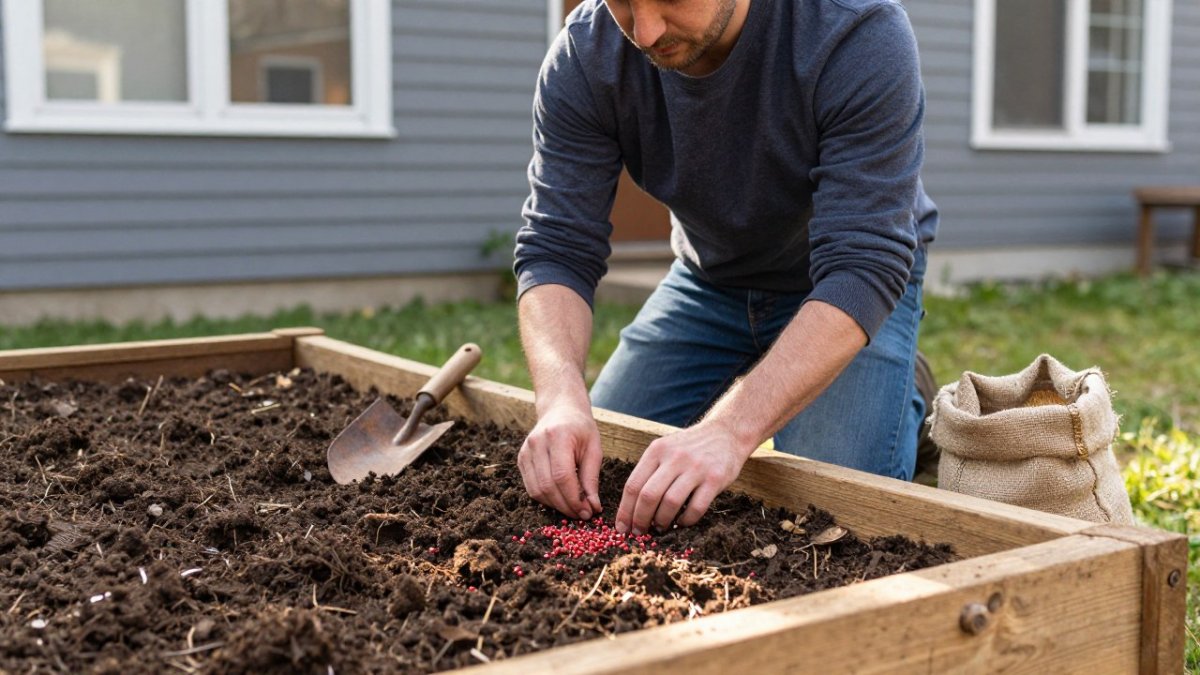
Planting is simple. Here is a basic method that works well in small beds:
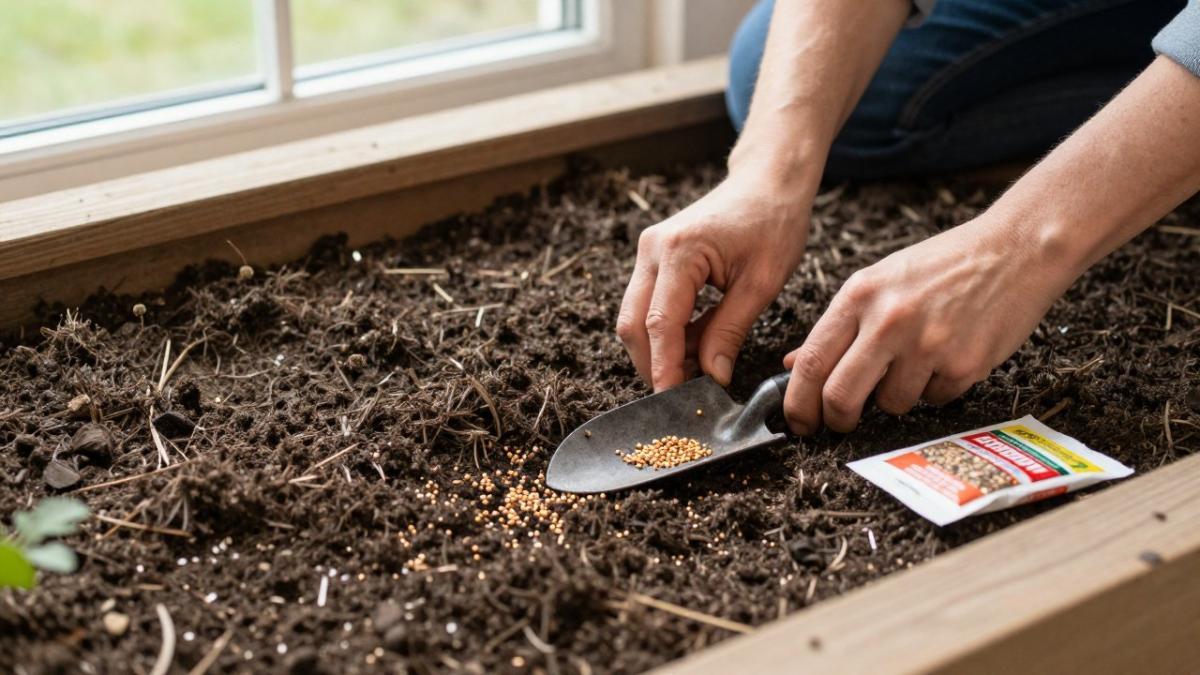
- Clear the bed. Pull out spent plants and loosen the top few inches of soil with a hand fork.
- Rake the surface smooth. A level bed makes even seed distribution easier.
- Scatter the seed. Follow the rate on the seed packet, spreading it evenly by hand.
- Rake lightly. Cover the seed with about a quarter inch of soil.
- Water gently. Keep the surface moist until the seedlings are up, usually one to two weeks.
Most gardeners find that planting in early fall or early spring gives the best results, depending on the crop and your climate.
!Gardener's hands scattering seed across a freshly raked raised bed with a hand trowel and seed packet nearby
When to Cut Down Cover Crops Before Planting
Termination timing is where most raised-bed cover crops go wrong. Cut too early and you lose the nitrogen and biomass you grew the crop for.
The general rule. Cut most cover crops at flowering or just before flowering. At that stage the plant has accumulated most of its nitrogen and biomass, and the stems are still soft enough to break down quickly.
Species-specific timing.
- Crimson clover: Cut when about half the flowers are open, usually 10-14 days after the first bloom. If you wait until seed heads form, you risk volunteers.
- Field peas: Cut when pods begin to form but before they fill. Peas break down fast and can become slimy if left too long.
- Winter rye: Cut at boot stage or when the plant reaches 12-18 inches. Rye cut after heading is harder to incorporate and its residue suppresses small seeds longer.
- Buckwheat: Cut 25-30 days after sowing, just as flowering begins. Buckwheat sets seed in about 30-35 days, so this window is narrow.
- Annual ryegrass: Cut before seed heads emerge. If it overwinters, mow it low in early spring and repeat if it regrows.
- Hairy vetch: Cut at early flower, before pods form. Vetch is aggressive and can reseed if left too long.
Termination methods for small beds. You do not need a roller-crimper in a raised bed. The practical options are:
- Cut and leave as mulch. Use scissors, pruners, or a string trimmer to cut plants at the base. Leave the residue on the surface as mulch. This is the simplest method and works well for clover, peas, and buckwheat.
- Chop and incorporate. For woody crops like rye, chop the residue into shorter pieces with pruners or a mower, then turn it into the top few inches of soil. Wait two to three weeks before planting.
- Tarp or occultation. Cut the crop, water the bed, and cover it with a black tarp or a heavy layer of cardboard for two to three weeks. This speeds breakdown and smothers regrowth, which is useful for vetch and ryegrass.
- Winter kill. In cold regions, oats, field peas, and buckwheat die at frost and need no termination. Leave the residue in place as winter mulch.
Residue and nitrogen tie-up. Fresh, high-carbon residue like rye can temporarily tie up nitrogen as soil microbes break it down.
When timing slips. If the crop sets seed before you cut it, cut and remove the residue rather than leaving it on the bed, because viable seed will germinate.
Watch out: Do not cut a cover crop and immediately plant small seeds into the residue. The physical barrier and the microbial flush can reduce germination, so give the bed at least a week and preferably two before direct seeding.
A simple calendar helps: mark the cut date on your phone when you sow, then count forward by species. For most raised-bed gardeners, that one reminder prevents the two most common failures, seed set and a bed that is not ready when spring planting arrives.
Booking Help for Your Raised Bed Planning This Season
Planning a raised bed rotation can take time, and it is easy to miss the right window for seeding or cutting. If you would rather have a crew handle the timing and setup, Bigfoot Landscaping & Contracting offers seasonal cleanups and garden maintenance for homeowners in East York and the surrounding area.
Pricing depends on the size of the property and the work involved, so check our website or request a quote for current rates. Log in to your account to manage your bookings, and let us help you get your beds ready for next season.
Frequently Asked Questions
What are the benefits of cover crops in raised beds?
Cover crops in raised beds protect bare soil from erosion and compaction, add organic matter when turned under, and help keep nutrients from leaching out during wet spring and fall weather. Legumes such as clover and field peas also fix nitrogen, which feeds the vegetables you plant next. Because raised beds are small and often heavily worked, a green cover between seasons keeps the soil structure loose and biologically active. Growing cover crops also reduces the number of weeds that germinate in open soil, giving your vegetables a cleaner start.
Which cover crops grow best in raised beds?
Crimson clover, field peas, hairy vetch, buckwheat and winter rye are among the most practical choices for raised beds in Canada. Clovers and peas add nitrogen, while buckwheat grows quickly in warm weather and winter rye handles cold better. Choose based on the season: buckwheat suits a short summer window, while a mix of clover and rye can overwinter in a bed that is not planted until spring. Check seed packets for hardiness and sowing dates before buying.
Do cover crops prevent weeds in raised beds?
Yes, dense cover crops shade the soil surface and crowd out many weed seedlings, which reduces how much weeding you need before planting. They work best when sown thickly and allowed to establish fully before weeds set seed. Cover crops do not eliminate every weed, so you may still need to pull a few stubborn ones. Cutting the cover crop before it flowers also stops it from reseeding itself into your vegetable rows.
When should you cut down cover crops before planting vegetables?
Cut cover crops down before they go to seed, ideally when they are flowering but before the seed heads form. For most legumes this is a few weeks before you plan to transplant. Cut the plants at the soil line, leave the cuttings on the bed for a week or two to wilt, then either turn them into the top layer of soil or lay them on the surface as mulch. Allow roughly two to three weeks before planting so the residue starts to break down.